Sunday, July 22, 2018

Long time coming update

It has been a long time since a new post has been made on this blog.  A lot has been going on in a number of other projects and they needed to take priority.  As with all things, there has been some divergence as well as convergence as time
moved on, and that is the way the world works.  And as we all know, sometimes work can get in the way of life and larger purposes.

That brings to mind how communities operate.  Like life, there are never any 1 to 1 relationships that are exclusive and persistent.  The Universe is anarchistic and while there are certainly guidelines it appears to follow, there's always those new revelations of out-lier behaviours that no one expected nor can explain.

Much of what this author has done over an extended period of time is work on projects that are believed to help people live more full, enriched lives.  How that looks to any individual is up to them, and I do my best not to interfere with their own path and vision.  That is not for me to define nor determine for any other person, nor is it generally possible or desirable.
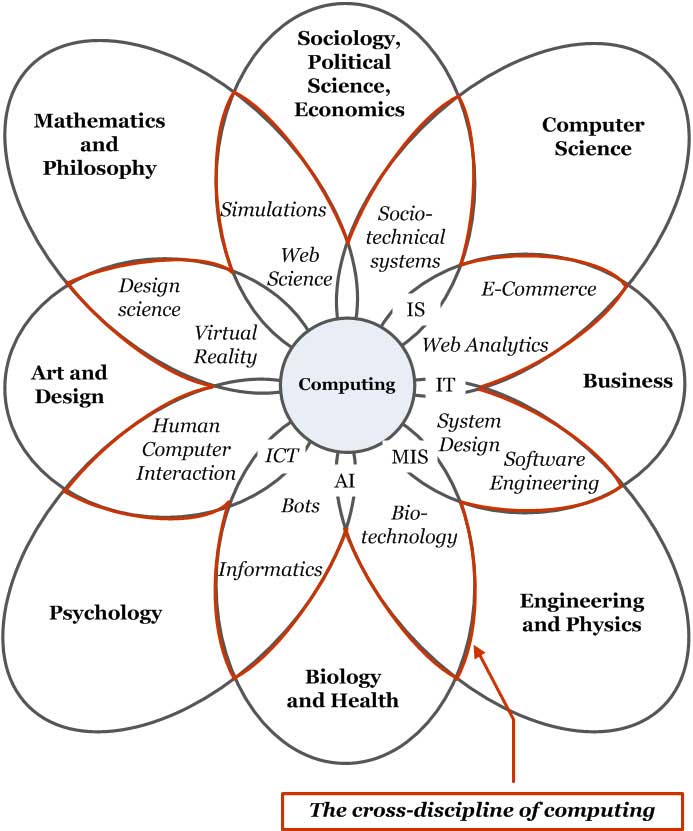
There are three main projects or initiatives that I've been focused on and there are some related, smaller projects that are intended to support the primary projects.  These include a quality of living technology framework called AEBL, the Open Information project which this blog supports, and a community building project called BANG (Barter And Networking Group).

I am a systems designer by nature, nurture and some schooling.  The problems I try to solve are often problems only I see and that can be frustrating to everyone involved, at times.  In the end, the desired result is to more finely tune an existing, functional and useful system or to disrupt a system that no longer serves a population or society.  Perhaps it never was intended to.

For those following along so far, thank you for getting this far.  I always appreciate anyone who takes the time to read and consider my ramblings.  So in considering the three primary projects listed above and the problems they are trying to solve, I will try to break them down quickly and concisely and in as clear a way as I can muster at this time.

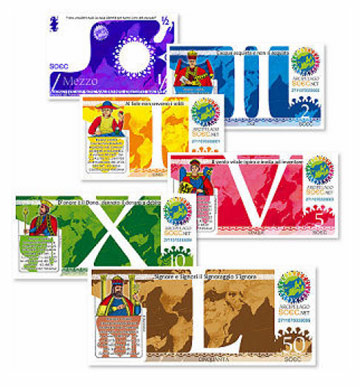
Many people feel the money system we have is broken.  For that reason, BANG was created by a Winnipeg local barter enthusiast by the name of Troy Goldenthal.  I stumbled across the group a number of years ago and decided I would squeeze my way into the group and see what could be done to help
support those who are interested in alternative means of value transactions.

Many, many years ago, I was commissioned to design a computer system around an electronic hardware technology that worked with television signals.  From that commission sprung the AEBL project which began as a distributed media system and has expanded to include the distribution of a lot more information than just video or audio.  The toolkit also allows people to stay connected with others, enhance their daily lives with smart technologies connectivity, and to provide a platform, not unlike an encyclopedia, to access, store and share, among some other functions it is able to perform.

And finally the Open Information project which is a long project that is being developed to help people learn, share, and grow in their personal lives as well as for community building.  Everything relevant from technology and science information, theories and hypotheses, to health and wellness, to business, to food growing, prep and preservation, to governance and economies and more.

So these are the projects and one can hopefully understand how they are all related and the sub-structures that are necessary to provide a full value to
anyone who is interested in any single aspect and perhaps even anyone in general for pure curiosity.

And there is always an ask.  This is it.  You might wonder, "How can I get involved?" And I would like to think your interest in being involved is because you feel you might get value out of these projects or the end result that is anticipated.  First, please feel free to offer feedback, opinions, and even challenges to these project. Without feedback, it is impossible to know if there is positive, forward movement.  Second, I hope that people can feel interested enough in the projects that they are compelled to share with others.  Without sharing, no one else can know about these project, provide their own feedback, and contribute significantly to the intended value of the end result.  And finally, contribute in some form.  That could be anything from helping edit documents, provide research, buy a coffee or lunch for those who contribute value to these things and to engage in any or all of these projects in a way that fits your capacity of resources.

Once again, for those who have made it to the very end of this post, I would like to thank you and offer my gratitude.  This may not have made any sense to you.  Perhaps you felt some consideration to read the entire post.  Maybe you felt you might get something out of it and maybe you did not get anything out of it.  Nevertheless, it is very much appreciated.  Cheers!

Monday, February 22, 2016

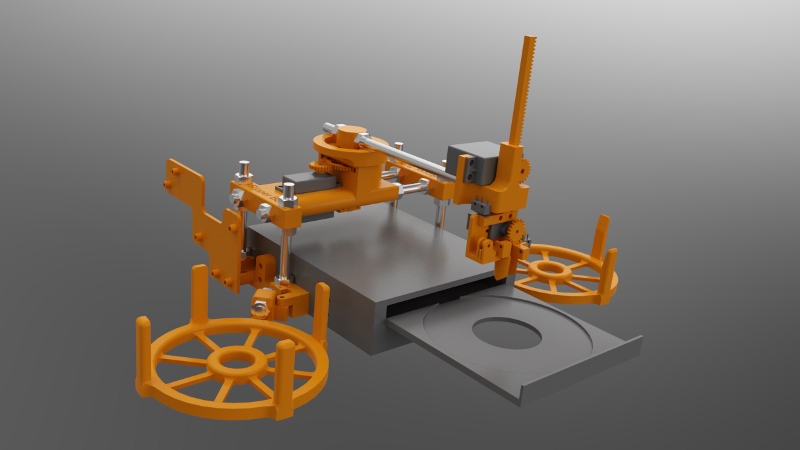
Raspberry Pi Project: Jack the Ripper Bot

Do you still have a lot of DVD content that you would like to be able to archive in a cool, efficient, hands off way?

This project is technically objective.  It is up to the builder to ensure that the resulting bot is used to conduct legal archiving of content.

DVD content has been around for many, many years and many people have amassed many, many DVDs.  Even though disk changer carousels exist,  having a hundred plus DVDs ready to view on demand is practically impossible.  This is where archiving can solve the problem.

Friday, February 19, 2016

Open Internet

It is with trepidation that this article is posted.  Not for the message, rather for distinct possibility that it might come across as presumptuous or even condescending.  With all the conversations and articles and global meetings around net neutrality, and even more so often a lack of conversation about it, it begs to question whether people know how the internet was designed to operate.

Net neutrality is, for those who don't know, the ideology that no one entity or person should control or moderate the information that is transferred between two or more computers or electronic devices on the internet.  That all data should be treated equally.

This concept actually stems from a philosophical ideology that suggests that basic human rights should include unrestricted access to common knowledge and communication, for better or for worse.

Before the internet was first thought up and designed, even before ARPANET (which many point to as being the parent of the internet), there were networks and global packet switching which were co-joined and shared.

Tuesday, February 16, 2016

Tribal self determination

It does not matter who you are.  It does not matter where you are.  We are borne into societies with established and existing rules, laws, norms, behaviours, and everything else that determines our existence.

Yes, that sounds like an extreme, even negative statement.  Yet, it is reality.  If we are born in North America, there are certain rules we are immediately expected to follow.  North American culture is unique to North America, and we notice when someone comes from another country, even if they look the same as us.  We notice by their behaviours, their beliefs, their language, and perhaps even their understanding of right and wrong.

The old adage stands, "When in Rome, do as the Romans."  We are expected to conform and submit.  If we do not agree, then there are channels that we are directed to use to attempt to affect change.  And it is there, that we may begin to see our worlds change around us.

Monday, February 15, 2016

Open Money?

Money is something that is, for most, taken for granted.

On its public facing side, it is described, and accounted for, in a very simple way.  A good or a service is allocated some arbitrary value and in order to obtain that good or service, we submit that value in dollar (currency) notes of that value.

It goes by many different names: Dollar, Pound, Euro, Yen, Peso, Rubble, etc.  They all function the same way.  They are also interchangeable.  We can take our common currency and exchange it for another currency, in the event that we wish to make purchases in another country.

Making copies of existing, legal tender is illegal.  There are also many ways in which creating an alternative money can also be illegal.  But why would one want an alternative, or "open", money?

Wednesday, May 28, 2014

Arduino project: Acrylic 'N'' LED sculpture

This week's arduino project starts with the letter 'n'.  Well, and it ends with the letter 'n', as well.

While the image to the right doesn't do the end result justice, it is a fairly good representation of what you should get, when done.

It is unclear why a person would want the letter 'n', created as a "multi-layered, acrylic and LED sculpture, with variable lighting levels", hanging on the wall.  The instructables user


Monday, May 26, 2014

Open Source Energy

So this post is going to delve into the highly controversial and emotionally volatile realm of so called "Free" energy.

For many hundreds...  nay, thousands of years, people have been conned into new ideas that simply turn out to be some form of snake oil.  For all intents and purposes, the con in itself is simple.  Use jargon and claims of expertise to promote and sell a product or invention that ultimately does not work as advertised.

When talking about energy, these types of claims are usually described as unity, over unity, free energy, etc.  In this article, we will be looking deeper into this realm and discuss something that is perhaps much more relevant to any impending energy revolution.  That a free energy revolution is more about Open Source freedom, than about breaking the laws of thermodynamics.

Sunday, May 25, 2014

Software Sunday: Bare Metal Linux


In our Open Source Sunday articles, we will be doing our best to present Open Source software that works on all three major operating systems (Win/Mac/Lin).  In some cases, that's just not an option.  But there are ways to use Open Source software, even if your OS isn't supported.

One of the ways to use non-native, Open Source software is to use a virtual machine.  A piece of software that can emulate a piece of hardware that can then run a supported OS.  That is an option we will be covering in another article.

In this article, we will be discussing Bare Metal Linux.  That is a phrase that basically means that Linux runs on the physical hardware layer of the computer.  And of course, Linux runs on pretty much every piece of hardware out there, as we will touch on, as we present the Open Source software called Linux.

Friday, May 23, 2014

Raspberry Pi Operating Systems

The Raspberry Pi is a great, little computer.

Of course, with electronics you can create a circuit that will do...  something...  with a computer, you really need software, in order to do something.  And it all starts with an operating system.

The Raspberry Pi enlisted the GNU/Linux community to create a version for the Pi, and so far, there's already more than one, depending on your needs.

Wednesday, May 21, 2014

Raspberry Pi Project: Beetbox

Yes, Beetbox.

Take a Rasbperry Pi and some edible taproots and make yourself a musical instrument.

In this installation of our Raspberry Pi Projects, we'll take a look at making an interactive Pi by connecting up a Pi with beets a capacitive touch sensor which allows a person to play with their food.

This is the same technology as those light switches that one simply touches the base of a lamp, as an example, to turn the light on or off.  By touching the beets, the Pi will play a drum sample.

Monday, May 19, 2014

Open Source money: what is it?


It is often called Open Source Money.

Open Source generally means that a person can copy and share the process, product, service, etc.  Also, a person can make changes which are contributed back to the source.  And changes can be shared with others as can derivatives which potentially lead to a fork or alternative to the original.

Is that the case with Open Source Money?

In this article, we'll take a closer look at Open Source Money and hopefully lead people to consider possible pros and cons.

Sunday, May 18, 2014

Software Sunday: Gimp

Maybe it's an unfortunate name, but it certainly isn't an unfortunate application.  GIMP actually stands for GNU Image Manipulation Program.  If there was ever an understatement, it is, "but it's much more than that".

This is one of those programs that, it is really unfair to compare it to commercial products, such as Photoshop.  The reason being, because GIMP really is as good, and better, than it's commercial counterpart.

In this week's Software Sunday, we will examine how that bold statement can actually be made.

Friday, May 16, 2014

Open Source meritocracy: is it a good thing?


What is meritocracy, how does it work in Open Source, and is it helpful or hurtful (to the individual or to the project)?

Meritocracy \ˌmer-ə-ˈtä-krə-sē\ - "a system in which the talented are chosen and moved ahead on the basis of their achievement", states the first definition of the word.  The second is perhaps a little more telling: "leadership selected on the basis of intellectual criteria".

We've possibly heard the word or idea being tossed around, sometime during our lives.  Open Source seems to be quite taken by it.  So, it sounds like a good idea, what could go wrong?

Wednesday, May 14, 2014

Arduino project: Persistence of Vision


Many people may have seen something similar to this, in one form or another.  They used to be made with materials like a spinning wheel, where one can create a penciled animation come alive.

The concept is called persistence of vision, and it takes advantage of the fact that our eyes and brain have a way of combining things we see over a period of time, into something that might actually not exist at a single instant in time.

This weeks Arduino project bring to you a simple Persistence of Vision Wand by instructables user amandaghassaei.

Monday, May 12, 2014

Intel® Galileo: Arduino compatible development board

Intel® has taken on the niche market of the maker community.  Around the beginning of Oct. 2013, Intel and Arduino co-announced the release of the Intel Galileo board that is Arduino compatible.

At around $60+ per board, it is more expensive than an Arduino board, although for those who prefer a large brand with more features, it might be worth looking at.  Certainly, there is a price to pay for that.

In this article, we will take a closer look at this Intel / Arduino colaboration and how it might find its way into a Maker's project.

Sunday, May 11, 2014

Software Sunday: Miro Media Player

Starting this week, we will be posting highlight articles about Open Source Software every Sunday.

While we have used plenty of different open, or even free, programs over the last two decades, everyone finds the ones that work for them and that they like and become familiar with.  Often, we stop there and look no further for perhaps better suited or other interesting applications.

Open Source Software covers all areas of technology, from mobile to desktop, and general to special purpose.  Often covering solutions we didn't even consider or were not looking to solve.

We may present some that you already know well, even though you may not know they are open source, and perhaps show you some you didn't even know existed.  And some may be bullet proof, production and corporate ready, while others may be beta or pre beta.

This instalment is on the Miro Media Player.

Friday, May 9, 2014

Why NOT Open Source

A lot of discussions revolve around the value of Open Source.  There certainly are a lot of reasons to embrace it, at least in some form or another.

It is possible, that perhaps a more relevant and interesting discussion to have with people is, "Why not?"

In a way it is unfortunate, a lot of conversations about Open Source only take into consideration the value of Open Source, but do not take into context the specific audience.  In a way, it is a form of peer pressure to suggest that one MUST move to Open Source, for the betterment of humanity.

Wednesday, May 7, 2014

Raspberry Pi Project: Sun Power for Pi

This instalment of the Raspberry Pi Projects is perhaps a bit simplistic, depending on one's knowledge of electronics, but it can be a valuable project when available power is a problem.

Of course, with many of our personal electronics devices, they may be specifically designed to operate away from power sources, and come with their own battery packs.

And, a person can pick up kits to power their electronic devices which are to be used in locations where a power source is not available.

Today, we will discuss one specific solar powered kit by instructables user hackitbuildit which can take care of your Pi needs, when the Pi is to be used away from a power source, such as at camp or when the Pi is to be used in an outdoor application.

Monday, May 5, 2014

Free (Open Source) Beer

While I had previously seen home made wine and beer and was well enough aware of the microbrewery phenomenon, it was confusing to me that, something that people had been creating for thousands of years, was to be either purchased at a store selling liquor, or purchased as a kit from a store.

For both romantic reasons and also for the purpose of not having to rely on a company to produce something for me, of which I had no control over quality, it was baffling that a person could not make their own spirits from scratch.  So in 2008 I took it upon myself to learn about mead and eventually created from scratch, less the yeast which was purchased from a store, what I would call the best apple mead that I'd ever tasted.  Of course, I had never had apple mead, so...

It really was a huge success and I learned a lot along the way.  I have not created any new alcoholic beverage, since.  But if I do, I am certain that it will be "from scratch" once again.  There's nothing quite like the quality and flavours one can create with their own recipes and fresh ingredients.

Apparently, it's not just me that likes fresh made food and drink.  As beer, among other beverages, is moving into the Open Source realm.

Friday, May 2, 2014

Open Source Knitting

Some people work with electronics, some people are proficient with numbers and money, others paint or play musical instruments.  And some people...  knit...

For those who don't know, working with textiles might seem like a pretty simple thing to do, but most of us buy our clothes from the store and throw them out when they are worn out or old.

I can't even begin to claim any significant knowledge of textiles, aside from the most basic knowledge of the process from raw material to the clothing we wear.  But there are people who know this industry in and out, and for them, a knitting machine is the cat's meow.

In this article, we will look at how knitting is entering the Open Source community.